By Michael "Mickey" Scornavacco MickeyX3.com
Alright. Let's walk through this without the memes and chest-thumping.
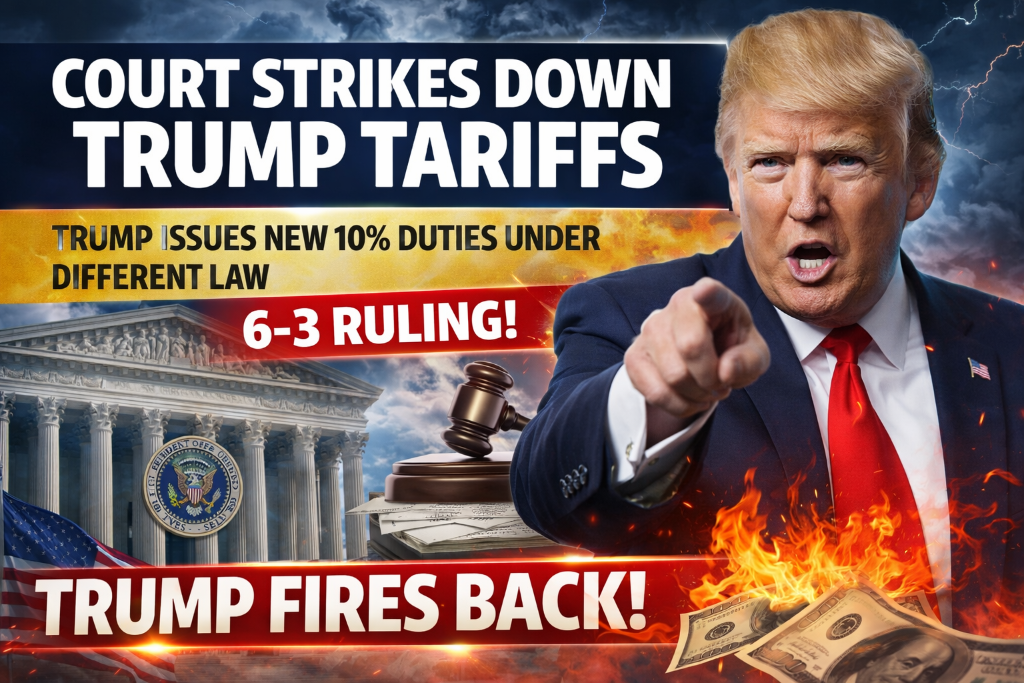
The U.S. Supreme Court ruled 6–3 that President Donald Trump used the wrong law when he rolled out sweeping global tariffs under the International Emergency Economic Powers Act.
Translation?
You cannot use an emergency statute as a blank check to tax the world.
Tariffs are taxes. And the Constitution gives Congress the power to tax. The Court basically said IEEPA was never meant to authorize broad, across-the-board import tariffs.
That is not partisan. That is structural.
Separation of powers 101.
But Here's Where It Gets Interesting
Trump did not retreat.
Within hours, he pivoted.
Instead of IEEPA, he cited Section 122 of the Trade Act of 1974 and issued a 10 percent global tariff under that authority.
Different statute. Different legal foundation.
Section 122 allows the president to impose temporary tariffs for up to 150 days to address trade imbalances while investigations move forward. It is not unlimited. It is not permanent. But it is written into law.
So when people say Trump "just used another law and added 10 percent," that is partially accurate. What they leave out is the constitutional boundary the Court just enforced.
The Supreme Court did not validate the original tariffs. They rejected the legal path he used.
Trump responded by choosing a different path.
That is not chaos. That is institutional push and pull.
Why This Actually Matters
This fight is bigger than tariffs.
This is about executive power.
For years, presidents of both parties have stretched emergency authorities. The Court just signaled that there are limits. Emergency powers are not a workaround for congressional authority.
At the same time, the president still has tools. Congress wrote trade statutes that allow temporary action. Trump is now using one of them.
That means this is far from over.
Section 122 tariffs expire after 150 days unless extended properly. Investigations must move forward. Congress could intervene. Other countries could retaliate. Markets could react.
This is constitutional chess in real time.
If you support Trump, you see strategy. If you oppose him, you see overreach corrected.
Either way, the system functioned.
The Court drew a line. The president adjusted. And America keeps arguing.
Welcome to 2026.
More straight talk at MickeyX3.com
📢 Share This Story
Help spread the truth - share this story with your network!